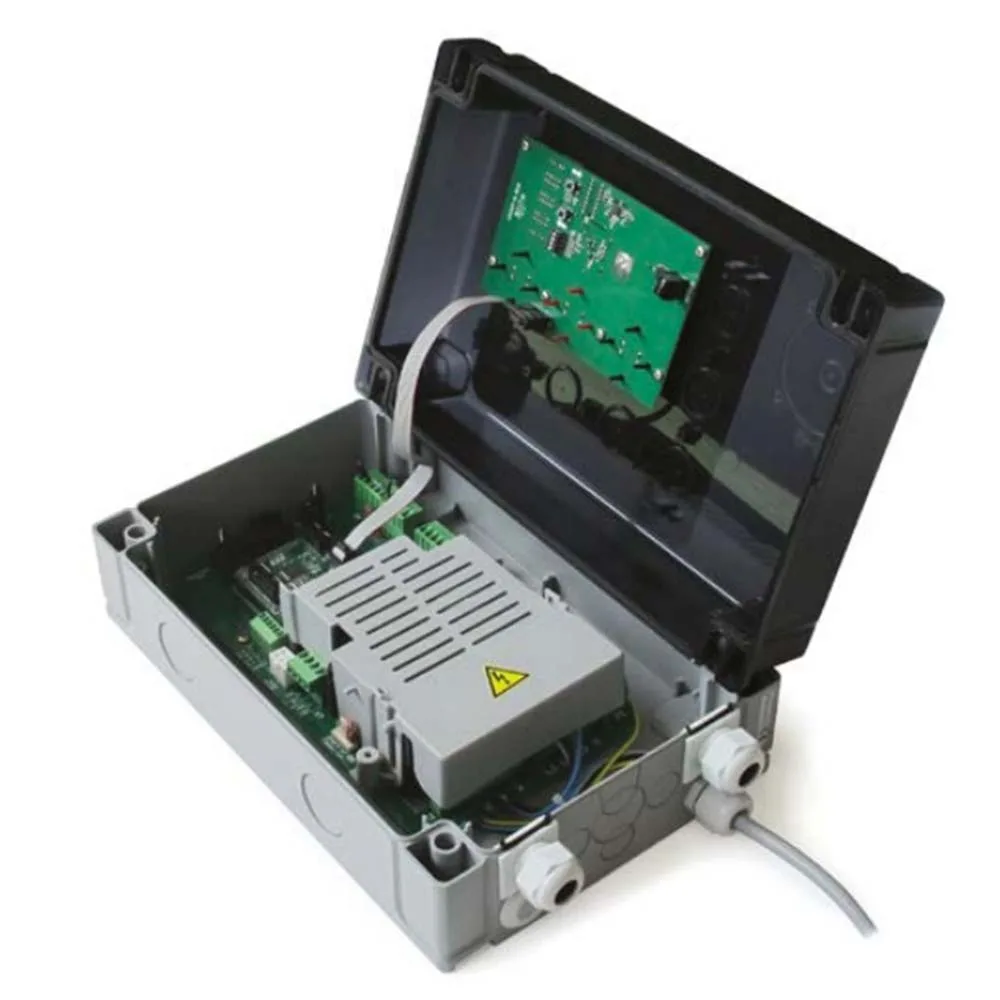
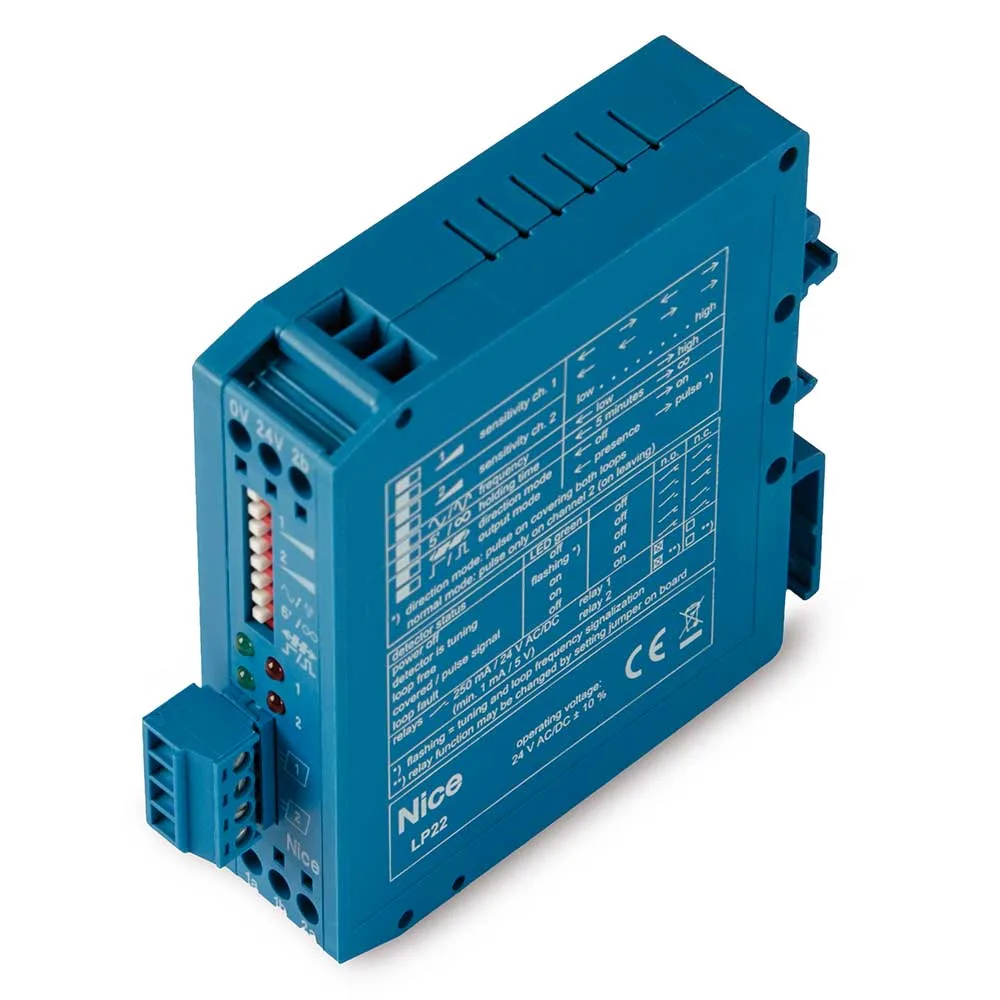
Inductive loop detector: how Nice LP21 and LP22 work
An inductive loop detector recognizes vehicles passing over a cable loop on the roadway. At Nice gates and barriers, for example, the machine can close the arm after passing or hold it up while the car is under. We show you how you choose between Nice LP21 and LP22.
In short: LP21 reads a single loop, and LP22 reads two, both at 24 V; in addition, the loop position and adjustment make all the difference.
Do you need help choosing?
Tell us what you need and we'll send you the offer on the same working day.
An inductive loop detector brings comfort and safety to any barrier or gate with car traffic. Choose LP21 for one loop and instead LP22 when you have two loops or two bands. Then prepare the correct loop, with distance from the metal and twisted conductors. Finally, you adjust the sensitivity and test the passing of a car. See both models in the category Metal detectors And ask the advice of the Nice Store team for your installation.
A loop inductive detector feels a car passing without buttons, without remote control and without physical contact. On the Nice Store you find two Nice models of this type, namely LP21 and LP22, both at 24 V. In the present guide we explain how they work, where you use it and what brings, in addition, the second channel.
What does an inductive loop detector do
First, a few words about the principle. The loop means, in the first place, a wire placed in a few pins, in a ditch cut into asphalt or concrete. The apparatus then sends a signal through this cable and continuously tracks the inducement. When a large metal mass, such as a car, reaches above the loop, the value changes. Thus, the device closes a contact and announces the central barrier, gate or parking.
In other words, an inductive loop detector works as a presence sensor for vehicles. On the other hand, it does not react to pedestrians or animals because they do not have a metal mass. The manufacturer also calls it a metal mass detector, a name you see in the records in the store.
What a loop detector is used for
Concrete functions depend, however, on the central automation and how you configure it. However, a few scenarios appear very often:
- Automatic closure of the barrier, i.e. immediately after the car passes by the arm.
- Keep the arm up so that it does not descend over the stopped vehicle.
- Opening at exit, without remote control, especially in private parking.
- Signalling vehicles, for example, in a traffic management system.
Therefore, a loop inductive detector completes the photocells, does not replace them. The picture follows a narrow line, but the loop feels the vehicle all over its surface. Together, therefore, the two cover and the high cars, and the low ones.
Nice LP21 and LP22: one channel or two
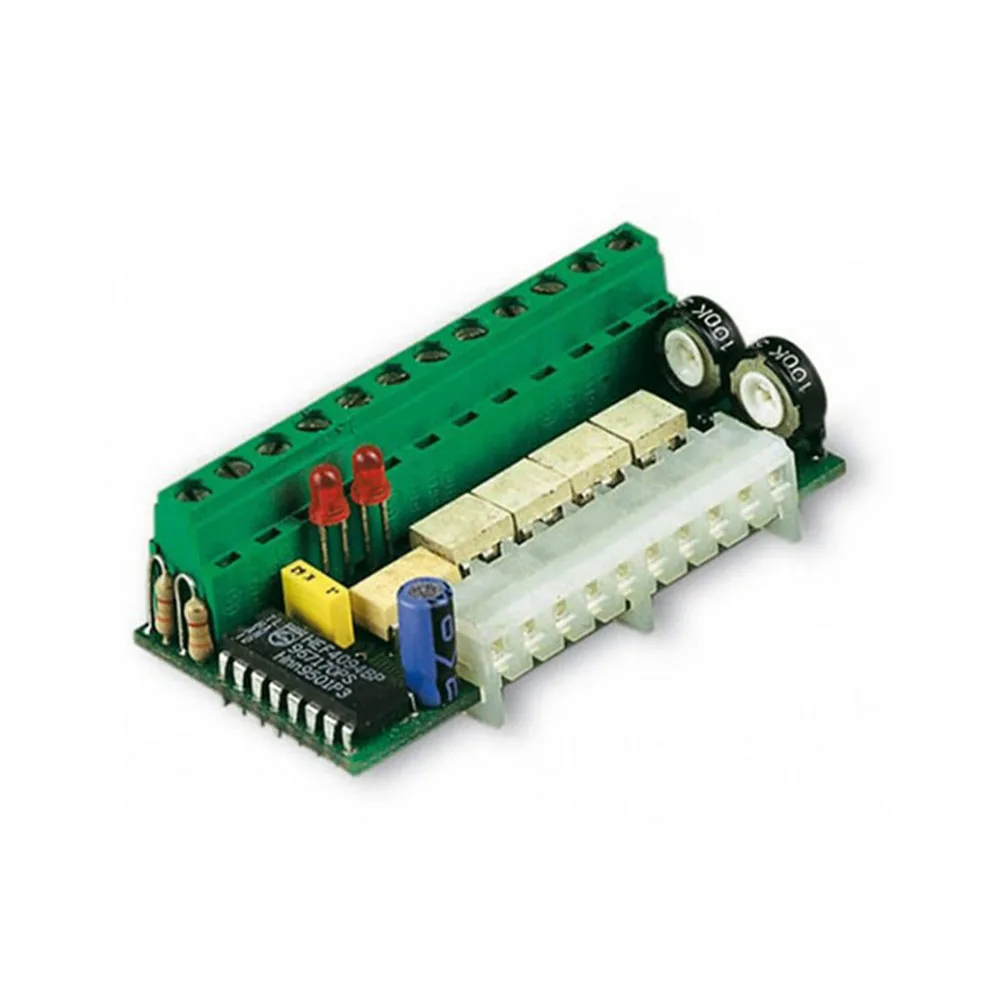
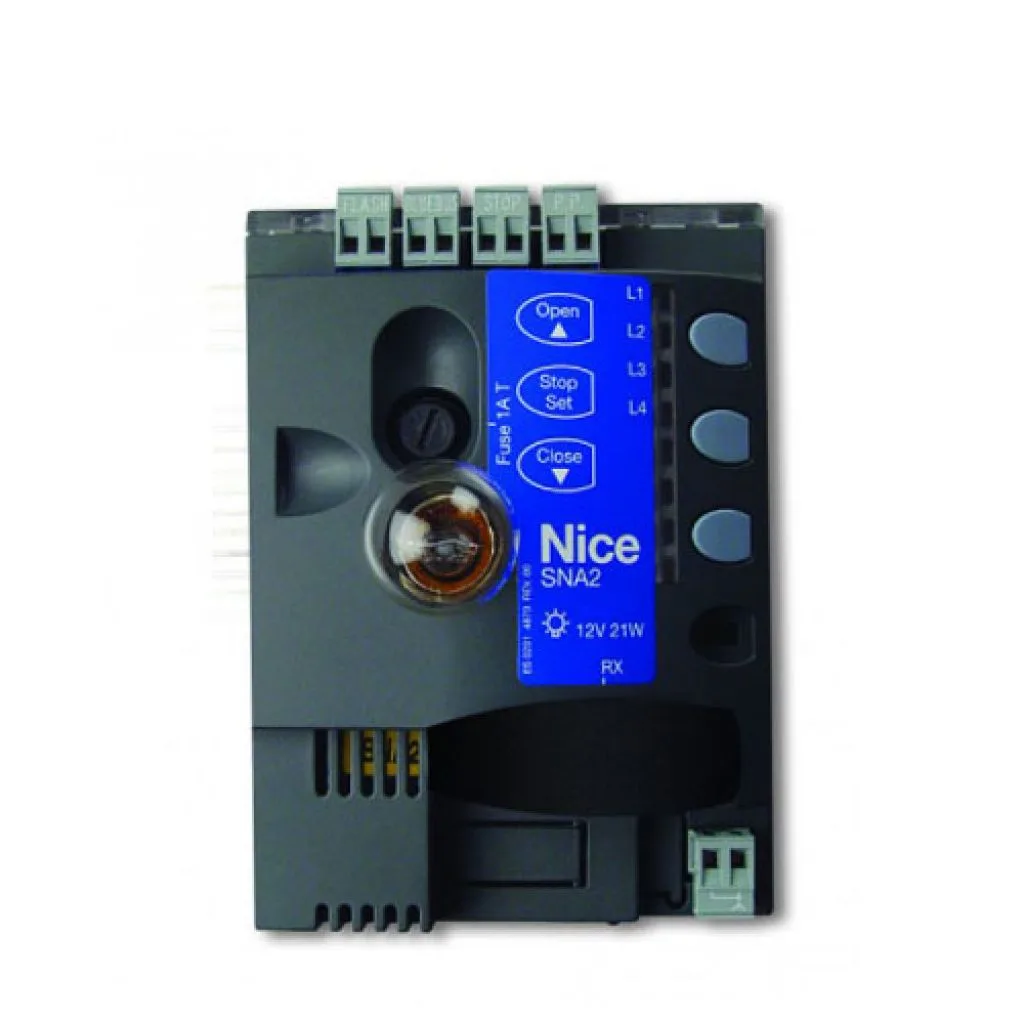
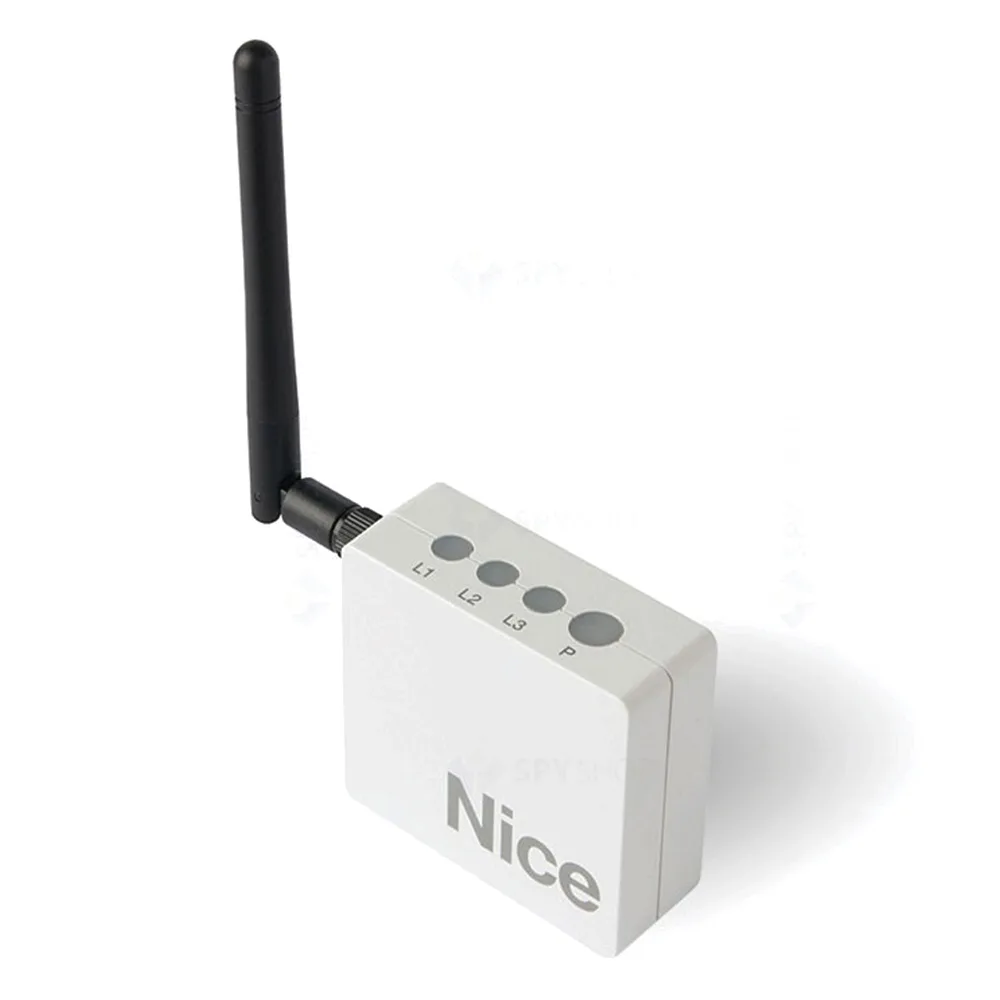
Category Metal detectors and, therefore, two variants. First, the model Nice LP21 has only one channel and works at 24 V. The manufacturer proposes it for control of the barrier, the door, the gates and also for traffic management. Instead, Nice LP22 has two channels, all at 24 V, i.e. read two separate loops.
One channel: loop detector for a tape
First, one channel serves one loop. For example, at a single-banded barrier, the loop behind the arm reaches for automatic closure. Therefore, LP21 remains the simple choice when you have only one point of detection. In this case, a loop detector on a channel occupies a little space and adjusts easily.
Two channels: when it deserves LP22
With two loops, instead, the system receives more information. A loop before the barrier and one after it shows, for example, the order in which the car passes. Thus, the power plant can distinguish the exit entry, if its logic allows this. At the same time, you can use a two-channel inductive loop detector for two joined bands. On the other hand, LP22 saves space in the control box, because it takes the place of two devices.
Inductive loop detector near Nice barriers
Most of the mountings of this kind appear, in particular, at the barriers. On the Nice Store you find, too, Barrier bodies and Barrier kits, and both categories are doing well with the LP detectors. For example, Nice WIDES barrier body, For bars of 3–4 meters, work all at 24 V. So, too Nice WIDES kit with 4 meters arm comes with remote control, but loop detection adds it separately.
Before ordering, however, check in the power plant manual what you have free entry. Some plants have, for example, dedicated entrances for stop, photocells or orders. The detector's contact then reaches one of them. So, a loop inductive detector connects correctly only after you know what function you want from it.
How to mount an inductive loop on the roadway
The loop itself is, however, not part of the apparatus. First you realize it from the cable, which you sit in a narrow ditch, cut with the disc in asphalt or concrete. Then fill the ditch with a sealing material, so that the water does not reach the cable.
- First, it chooses a rectangular shape, a little narrower than the circulation band.
- Keep away from armor, metal caps and, in particular, power cables.
- Turns the conduits between the loop and the device, so it reduces interference.
- It then notes the exact position for subsequent interventions.
At the same time, the dimensions, the number of pins and the depth of the pins are determined by the manufacturer's instructions, not by the eyes. In addition, an inductive loop detector requires sensitivity adjustment after assembly, especially next to metal structures.
Mistakes that damage the detection
Most problems do not come from the apparatus, but in particular from the installation. Here are, for example, the situations we often encounter:
- The loop stays too close to the metal bars, so the machine feels the bars moving.
- Two neighboring loops work at close frequencies and thus disturb each other.
- The connection cable remains non-irrigated and therefore collects electrical noise.
- Too high sensitivity triggers vehicles on the sideband instead.
A well-placed loop and careful adjustment, however, provides a stable detection over time. So it's worth treating an inductive loop detector as a safety piece, not as a simple accessory.
Safety and traffic rules in parking lots
Vehicle detection helps a lot, but it doesn't take the place of signaling and access rules. For public open parking, consult, in addition, the rules of movement and the information provided by Romanian Police. Also, the final solution for a large parking lot will be established after the project and after an analysis of the vehicle flow. Only then do you choose how many loops you mount and what inductive loop controls detector.
Frequently asked questions: metal detector masses
Does a loop detector work with any barriers?
The exit contact shall be linked to the entry of a power plant, but the compatibility shall be checked in the manual. For Nice barriers, for example, our team tells you what entry you use.
What power supply do LP21 and LP22 require?
Both models work at 24 V, so check that the installation provides this voltage.
Feel the detector motorcycles?
It depends primarily on the metal mass and sensitivity. Smaller vehicles give a weaker signal, so the adjustment matters a lot.
Do I need two channels?
Unless you have two loops or, for example, two bands. For a single band, however, it usually becomes a loop inductive detector with a channel.
In conclusion, see the LP21 and LP22 models in the category Metal detectors. If you don't know which variant fits your barrier, the Nice Store team will also help you choose on the basis of the installation scheme.